- info@thrivehouseorm.org
- (909) 655-1093
- Ephesians1:7- In him we have redemption through his blood...


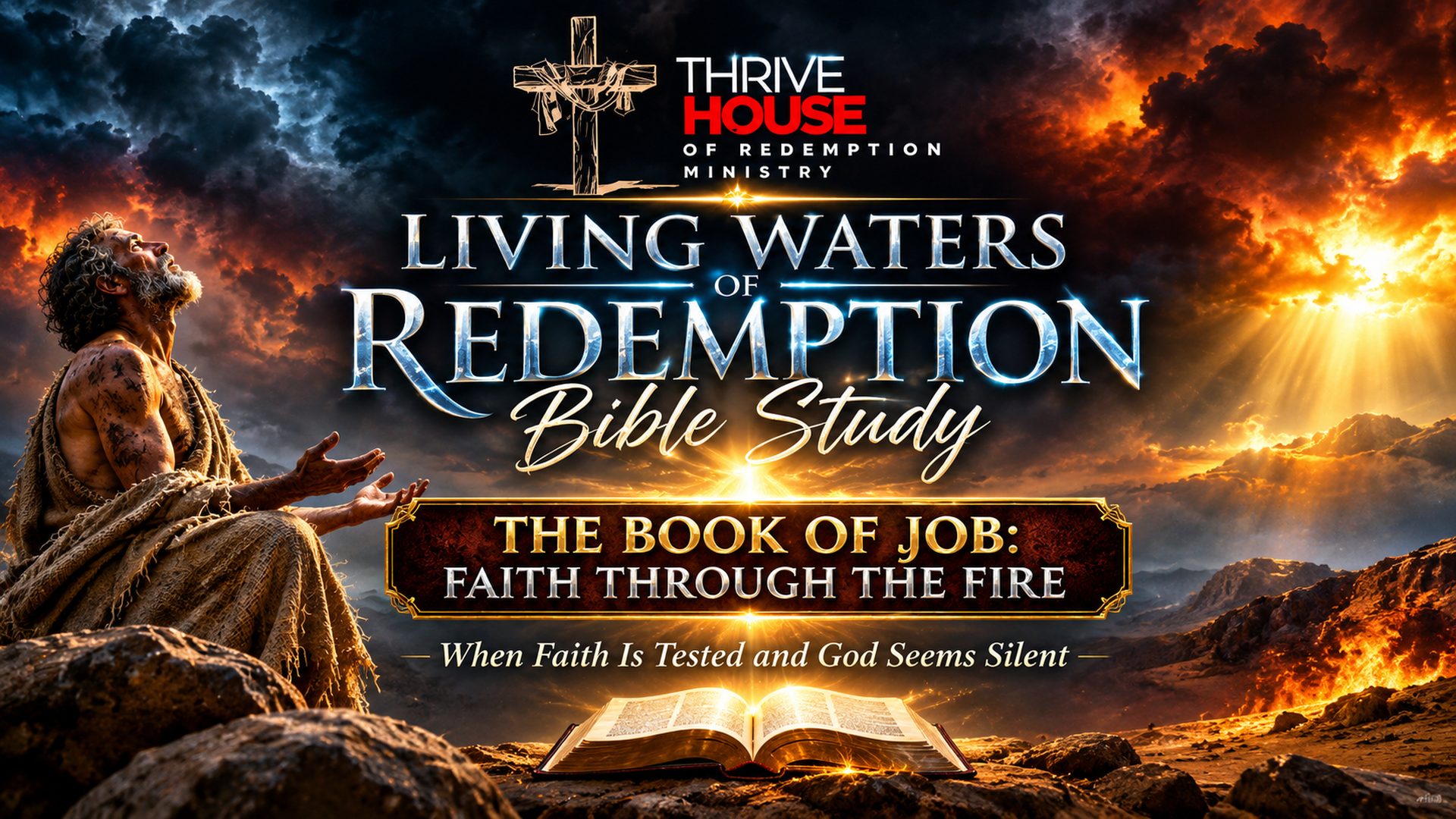
The Book of Job contains 42 chapters. We will study one chapter per day, exploring the events, conversations, spiritual lessons, and revelations found throughout this remarkable book. Every daily lesson remains available for self-paced study.
Every Wednesday at 7 PM Pacific, we gather online to review the previous seven chapters, explore difficult passages, discuss spiritual insights, ask questions, and pray together.
Our weekly gatherings take place inside the Thrive House of Redemption Virtual Sanctuary online via Zoom, where we come together to study the Word and strengthen one another in faith.
What happens when someone who loves God, fears God, and walks in integrity experiences unimaginable suffering? What happens when prayers seem unanswered, friends misunderstand your pain, and everything you believed was secure suddenly falls apart?
The Book of Job confronts these questions with extraordinary honesty. Scripture introduces Job as a man who was “perfect and upright, and one that feared God, and eschewed evil” (Job 1:1, KJV). Yet his integrity did not prevent devastating loss. Job lost his possessions, his children, his health, and much of the understanding and compassion he needed from those around him.
The reader is shown a heavenly conversation that Job himself never hears. This distinction matters. Job's suffering is not introduced as punishment for some secret wickedness. Instead, the book challenges the assumption that suffering always reveals God's displeasure or that prosperity always proves a person's righteousness.
As the story unfolds, Job wrestles with grief, questions God's justice, listens to friends who repeatedly misinterpret his suffering, and ultimately encounters the Lord in a way that changes his understanding. This is not simply a story about losing everything and getting it back. It is a profound examination of faith, worship, human limitations, divine wisdom, and what it means to trust God without possessing every answer.
Through this study, we will examine the Scriptures carefully, distinguish what God actually says from what people assume about Him, and consider how these truths speak to seasons of grief, hardship, spiritual testing, unanswered prayer, and restoration.
Learn what it means to continue seeking God when you cannot understand what He is allowing, and why unanswered questions do not automatically mean abandoned faith.
Examine the heavenly scenes in Job 1–2, Satan's accusations, the boundaries God establishes, and what the text reveals—and does not reveal—about spiritual opposition.
Discover how Job expresses genuine sorrow while continuing to engage with God. Biblical faith does not require pretending that suffering does not hurt.
Study the words of Job's friends and learn why religious-sounding explanations must still be tested against God's character and the full testimony of Scripture.
Explore God's response from the whirlwind and the difference between knowing things about God and encountering the depth of His wisdom and majesty.
Consider Job's final chapters, his intercession for his friends, and the restoration God brings—without reducing the book to a promise that every earthly loss will be repaid.
Our first weekly Bible Study examines Job Chapters 1–7. We begin with Job's integrity and devotion, the heavenly accusation, the devastating losses that follow, and Job's remarkable response of mourning and worship.
We will then explore the second test involving Job's health, the arrival of his friends, Job's heartbreaking lament, and Eliphaz's first attempt to explain his suffering. As Job responds, we will consider the difference between genuine compassion and explanations that place additional burdens on someone already in pain.
Central question: Can faith remain genuine when the blessings are gone, the reason is hidden, and the heart is overwhelmed?
Read each assigned chapter prayerfully and carefully. Pay attention to who is speaking, what that person knows, what the passage actually says, and whether a statement reflects God's truth or a character's limited understanding.
Write down a key verse, something that challenged your thinking, what you learned about God's character, and one personal reflection or prayer. As we move through Job's speeches, his friends' arguments, Elihu's words, and God's response, we will examine the complete biblical context rather than treating every statement spoken in the book as God's endorsement.
Come ready to ask questions, deepen your discernment, and grow in faith—not because every mystery has been explained, but because the God we seek is worthy of our trust.


